
Hyaluronic Acid
What is Hyaluronic Acid?
Hyaluronic acid is a naturally occurring substance in the body. When supplemented through injection, it can reduce the appearance of wrinkles and add volume to specific areas. Because it is a component already present in the body, the risk of allergic reaction from injection is extremely low, making it a highly versatile product.
The three key components of the dermis -- the layer that makes up the majority of skin tissue and gives it a youthful, hydrated appearance -- are collagen, elastin, and hyaluronic acid. Hyaluronic acid is renowned for its remarkable water-retention capacity: just one gram can hold up to six liters of water. It maintains moisture between cells and preserves skin flexibility. In its gel-like form, hyaluronic acid expands as it absorbs water. Collagen is a fibrous protein that forms skin and cartilage, providing the skin's elasticity. Elastin connects collagen fibers together -- without elastin, collagen cannot function to its full potential. With collagen and elastin forming the structural framework and hyaluronic acid retaining moisture in the spaces between, the skin maintains its hydration, firmness, and youthful radiance.
Products Used at Our Clinic
Hyaluronic acid fillers are manufactured in various countries, including the United States and South Korea.
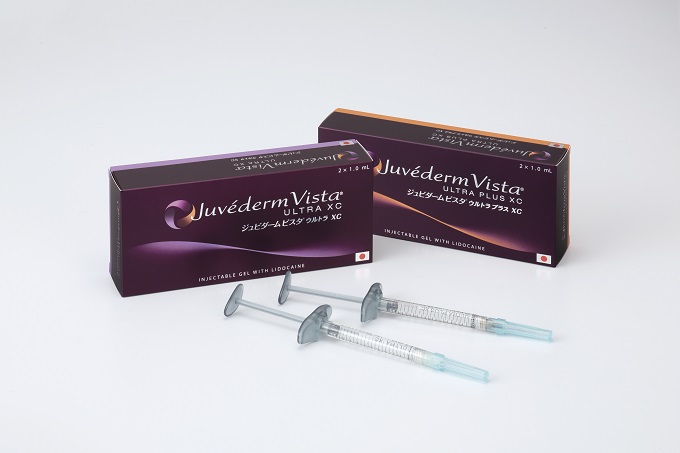
Our clinic primarily uses the JUVEDERM VISTA(R) series by Allergan, a global leader in the field.
This was the first cosmetic hyaluronic acid filler approved by Japan's Ministry of Health, Labour and Welfare, offering patients peace of mind.
It is an exceptionally reliable product, known for its long-lasting results and natural integration with the skin. Depending on the treatment area, effects can persist for up to 24 months, which helps reduce both the frequency of visits and overall treatment costs.
Because hyaluronic acid fillers vary in particle size, some products may produce unevenness or an unnatural appearance. Allergan's hyaluronic acid is exceptionally smooth, allowing precise control over injection volume and placement with excellent tissue integration, resulting in natural-looking outcomes.
Duration of Hyaluronic Acid Effects
With repeated treatments, the duration of hyaluronic acid effects becomes progressively longer.
Complete absorption of hyaluronic acid by the body typically takes one to three years. Compared to the rate at which the initial injection is absorbed, subsequent treatments accumulate and persist longer than the first.
For this reason, hyaluronic acid does not necessarily require re-injection every six months to one year. After two to three treatments, a sufficient amount remains in the tissue, so further injections are only needed when you begin to notice the effects diminishing.
Applications of Hyaluronic Acid
Traditionally, hyaluronic acid injection was perceived simply as a treatment to fill in wrinkles and depressions.
With the older approach of filling only hollowed areas, volume tended to concentrate in the lower face, disrupting overall facial balance and sometimes leaving patients feeling that while their wrinkles had improved, something was off.
Advances in injection techniques have now established the concept of hyaluronic acid lifting -- injecting into higher areas such as the temples and cheeks. Rather than targeting individual hollows alone, treatment now considers overall facial balance to achieve a naturally beautiful result.
At our clinic, we offer both targeted injection into specific areas of concern and comprehensive full-face injection for overall balance, tailored to your individual goals.
Although hyaluronic acid is gradually absorbed over one to two years, even as volume diminishes, it continues to provide long-term support for skin firmness and radiance from within,
making it a dual-benefit treatment that addresses both volume and skin quality in one procedure.
Recommended For
Facial Hollowing Concerns
Nasolabial Folds
Some patients -- even in their 20s -- are concerned about prominent nasolabial folds that have been visible since childhood. However, nasolabial folds are a natural facial feature and do not need to be completely eliminated. During the initial consultation, we assess whether simply adding volume to the nasolabial folds is truly the best approach for each patient. In cases where nasolabial folds have deepened due to aging, the cause is usually overall descent of the cheek area. In such cases, we inject hyaluronic acid across a broad area -- from the nasolabial folds to the chin -- to restore lost volume and achieve a natural result. Combining with thread lift treatment can further enhance the improvement.
Under-Eye to Cheek Area (Tear Trough / Mid-Face Lines)
As we age, the fat tissue beneath the skin from the under-eye to cheek area diminishes, creating hollowing. This makes dark circles more prominent and accentuates the indentation below -- commonly known as the tear trough or mid-face groove. By injecting hyaluronic acid along this line, we can reduce the appearance of these creases. At the same time, restoring cheek volume creates a fuller, more feminine appearance and a higher cheek position that conveys youthfulness.
Below the Mouth (Marionette Lines)
The area below the corners of the mouth tends to appear sunken as the cheeks descend with age. The resulting creases are known as marionette lines, and they may extend continuously from the nasolabial folds. Supplementing the lost volume from below the mouth to the chin with hyaluronic acid restores fullness to this area and creates a cleaner, more defined jawline.
Contouring with Hyaluronic Acid
Under-Eye Bags (Aegyo-sal)
This treatment is ideal for those who want their eyes to appear larger, create a more youthful and charming impression, add more dimension to their face, or simply want to skip the daily effort of creating aegyo-sal with makeup.
The lower eyelid is a slow-absorption area, so once injected, results typically last one to two years, and up to three years for some patients. Because the injection is placed right along the lower eyelid margin, the skin is gently drawn downward, slightly increasing the vertical eye aperture and making the eyes appear larger. We carefully adjust placement while assessing overall facial balance, as injecting too low can create a tired appearance.
Lips
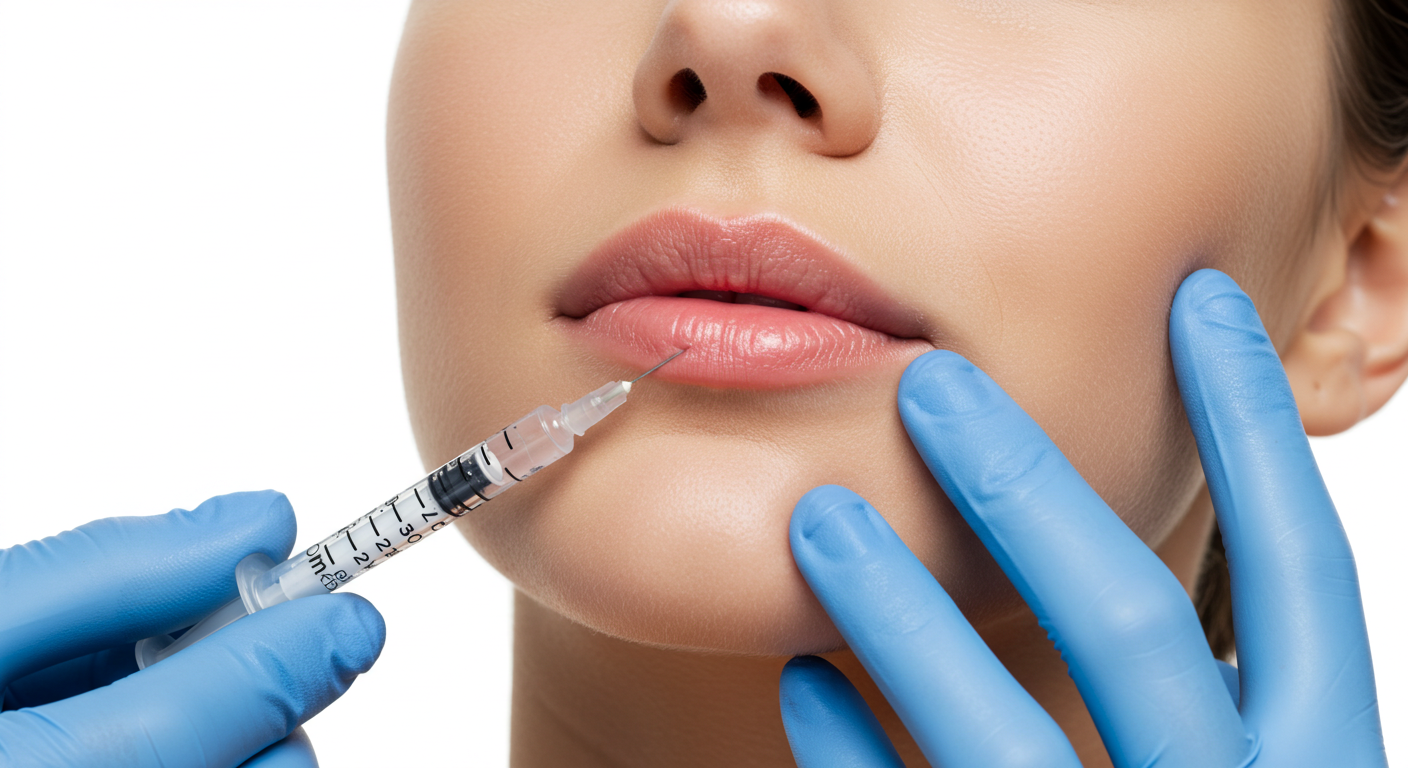
Many patients are concerned about thin lips that give a cold or flat impression, or feel that the balance between their upper and lower lips is off. Additionally, as skin loses firmness and volume with age, the lip border can become less defined, and vertical lip lines may become more pronounced. Lip enhancement with hyaluronic acid can create a more youthful, vibrant appearance.
Chin
A small or receding chin can make the face appear elongated, and the lack of transition from mouth to neck often results in a profile that lacks a defined E-line -- a condition commonly described as a receding lower face. By injecting a firm hyaluronic acid filler into the chin area, we can sculpt and define the contour. Since the chin can be shaped using injections alone, this treatment is popular among patients who want to refine their jawline without undergoing surgery.
Nose
Many patients have concerns about the shape of their nose. Thoughts like "I want a refined nose bridge like a model, but surgery feels intimidating" or "I can't bring myself to have a procedure involving a scalpel" are common. An increasing number of patients are choosing hyaluronic acid injection as a non-surgical alternative. Non-surgical rhinoplasty with hyaluronic acid can straighten the nasal bridge, smooth irregularities, correct deviation, and design the preferred height and shape -- all with injection alone and virtually no downtime.
Treatment Details
| Results | Results are visible immediately after treatment. Depending on the area treated, the filler is gradually absorbed over one to two years. |
| Treatment Time | Approximately 10 minutes per syringe of hyaluronic acid |
| Anesthesia | Generally not required; however, nitrous oxide sedation or topical anesthetic cream is available upon request. |
| Pain | We apply thorough cooling prior to injection, so any discomfort is very manageable. |
| Treatment Interval | Maintenance treatments are scheduled when you feel the effects have diminished or wish to add more volume. Due to the possibility of bruising or swelling immediately after injection, follow-up treatments are available no earlier than two weeks after the previous session. |
| Makeup | Spot makeup (avoiding the injection site) is permitted from the same day. |
| Cleansing & Bathing | Face washing and showering are permitted from the same day. Bathing in a tub is permitted from the following day. |
| Downtime | We use ultra-fine needles and exercise the utmost care during injection; however, since the procedure involves needle insertion, bruising cannot be entirely avoided. If bruising occurs, it typically resolves over approximately two weeks and can be concealed with makeup during this period. If you have an important event planned, we recommend scheduling your visit with at least two weeks of buffer time in case bruising occurs. |
| Risks | - Itching, pain, swelling, bruising, allergic reaction, or infection may occur. - In some cases, the corrective effect may feel insufficient due to dosage limitations. (Additional injections are available after 2 weeks, subject to additional fees.) |
| Precautions | The following patients are not eligible for this treatment: - Individuals under 18 years of age - Those planning to become pregnant within 3 months - Those who are pregnant, may be pregnant, or are breastfeeding - Please avoid massaging the injection site for 2 weeks after treatment. |
Risks of Hyaluronic Acid
Some patients express concern about vascular embolism -- a rare complication in which hyaluronic acid inadvertently enters a blood vessel, potentially causing tissue or nerve damage. At our clinic, we do not perform hyaluronic acid injections in high-risk areas such as the nasal tip or between the eyebrows.
All treatments are performed by physicians who have extensive experience from major aesthetic clinics and have completed Allergan's official JUVEDERM VISTA certification training program. Furthermore, should the need arise, hyaluronic acid can be dissolved using a specialized enzyme called hyaluronidase. Please feel free to consult with us.
Frequently Asked Questions
Treatment Flow
Please refer to this page for details on the treatment flow.